Thinking about adding an ADU to your Cathcart property for extra income or multi‑generational living? You are not alone. ADUs can be a smart way to unlock value, but success starts with the right site checks and a clear plan. In this guide, you will learn what to verify first, how to screen your parcel, the permits and technical hurdles to expect, and how to think about rent and resale in Cathcart.
This guide reflects information available as of November 2025. Always confirm current rules with Snohomish County Planning & Development Services and the Snohomish Health District before you design. Let’s dive in.
What to check first
Cathcart sits in unincorporated Snohomish County. The main ADU decision makers are county Planning & Development Services for land use and building permits, the Snohomish Health District for septic and wells, and your local fire district for fire access and water supply.
Expect a sequence that starts with a pre‑application check, followed by design and plan development, then building and health permits, with inspections during construction. Timelines vary by complexity. Septic or well work can add weeks.
What controls what you can build:
- Zoning for your parcel, including setbacks, height, and lot coverage.
- Critical areas like wetlands, streams, steep slopes, or floodplains.
- Sewer versus on‑site septic, plus any well considerations.
- Fire access and water supply requirements from the fire district.
- Parking rules and driveway standards that may apply to ADUs.
Quick site screen
A fast screen can tell you if your lot is likely ADU‑ready or if you need deeper due diligence.
- Zoning: Does your residential zone allow ADUs?
- Space: Is there a buildable area outside setbacks and existing structures?
- Critical areas: Any wetlands, streams, steep slopes, or floodplain in the target area?
- Septic: If on septic, do you have a documented reserve area or room to expand?
- Water: Public water or private well, and can it support the ADU?
- Access: Reasonable driveway slope and safe access to the public road?
- Utilities: Practical distance for power and water connections?
- Fire: Distance to a hydrant or will sprinklers and other measures be required?
Map your parcel
Use the county parcel viewer and available county and health district maps to overlay:
- Zoning, parcel boundaries, and building footprints.
- Critical areas and FEMA flood zones.
- Septic permit history, drainfield locations, and reserve area, if available.
- Sewer and water service boundaries and well locations where known.
- Slope contours and any utility or access easements.
Mark candidate building envelopes, then sketch possible ADU footprints. Flag lots that likely need a septic designer, geotechnical input, or a survey.
Red flags to spot early
- Wetland buffers or stream setbacks that cut into your build area.
- Slope over 15 percent that complicates foundations and septic.
- No documented septic reserve area on an on‑site system.
- Long utility runs or overhead power easements in the desired location.
- Narrow roads or tight driveways that hinder fire apparatus access.
Septic, wells, utilities, and fire
Technical factors in Cathcart can make or break feasibility. Plan these conversations up front.
- Septic: Adding bedrooms or new plumbing often triggers a septic review or redesign. Ask about soil type, groundwater depth, setbacks to wells and structures, and if expansion is possible on your lot.
- Wells and water: Private wells may need pump upgrades and must meet setbacks from septic. If public water is nearby, confirm connection options and costs.
- Stormwater: New roofs and paving increase impervious area and can trigger on‑site infiltration or small retention features.
- Power: Check distance to service lines and whether a separate meter is allowed for an ADU.
- Fire: Confirm required access width, turnarounds, hydrant distance, and minimum fire flow. Sprinklers may be required if hydrant coverage is limited.
ADU types and siting
Choosing the right ADU form depends on your goals, site, and budget.
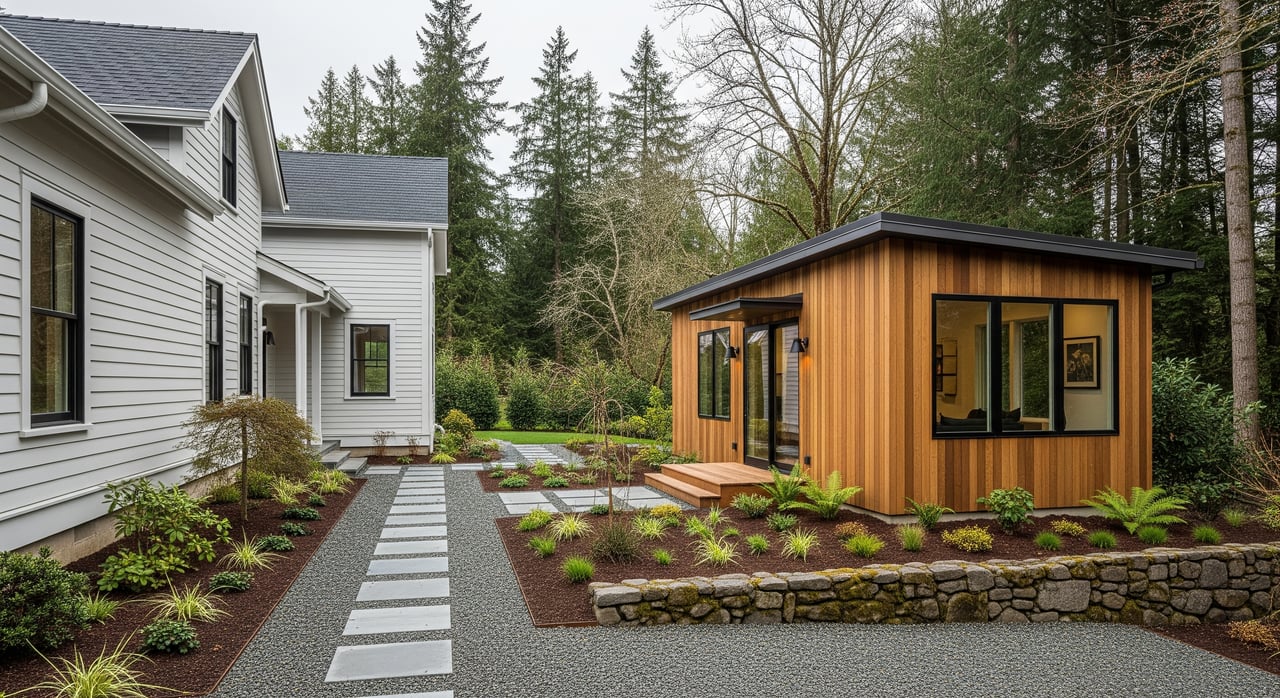
- Detached ADU: Strong privacy and rent potential, but higher cost and utility work.
- Attached ADU or garage conversion: Often lower cost and faster to permit, with potential parking tradeoffs.
- Internal ADU: Least expensive if you can reconfigure inside, but lower rent and value lift versus a detached unit.
Features that boost rent and resale:
- Full kitchen, in‑unit laundry, and a private entrance.
- Good natural light, quality finishes, and efficient heating.
- Dedicated parking and, where possible, separate utility metering.
Practical siting tips for Cathcart:
- Keep clear of existing drainfields and septic reserve areas.
- Use distance and landscaping to create privacy between units.
- On sloped sites, consider a daylight basement layout after confirming geotechnical needs.
- Cluster near existing utilities to limit trenching and cost.
Parking and access basics
County zoning may require on‑site parking for an ADU. Driveway width, slope, and sight distance can apply. Plan for one additional space unless code confirms an exemption. Confirm details in your pre‑application meeting.
From idea to permit
Follow a simple path to reduce surprises and shorten timelines.
- Run a GIS screen of your parcel for zoning, setbacks, critical areas, and septic history.
- Book a pre‑application call with Planning & Development Services and the Health District.
- Invite a septic designer for a site visit if you are on septic.
- Get ballpark contractor estimates that include utility work and site prep.
- Develop a site plan and floor plan sized to your setback envelope and septic capacity.
- Submit building and health permits and respond quickly to review comments.
Returns and resale
ADUs can produce income and broaden your buyer pool when you decide to sell. Treat the numbers with care.
Estimate rent
- Pull 3 to 5 rent comps for similar studios, 1‑bed, or 2‑bed units from Snohomish County communities near Cathcart.
- Adjust for location and privacy. Rural settings can see lower rents than urban cores, while strong access to main routes can help.
- Use a conservative range rather than a single figure.
Budget cost drivers
- Septic redesign or a new drainfield, water connection, and power upgrades.
- Site work for slopes, retaining, or driveways.
- Soft costs: design, permits, utility fees, and a 10 to 20 percent contingency.
Simple pro forma template
- One‑time costs: design and permits, impact or hookup fees, construction, landscaping, contingency.
- Ongoing costs: utilities if you cover them, maintenance, insurance, property management at 6 to 10 percent of rent, and vacancy at 5 to 10 percent.
- Financing: loan interest, origination fees, or the opportunity cost of cash.
- Metrics to track: annual rent, operating expenses, net operating income, gross yield, simple payback, and long‑term IRR if you model it.
Resale positioning
A permitted ADU with a private entrance, clear documentation, and durable finishes typically attracts more buyers. Maintain a clean file with approved plans, inspection records, septic as‑builts, and any energy compliance documents. If you have rental history, keep it organized for buyers and appraisers.
Sample parcel archetypes
- Suburban lot with sewer: Often the most straightforward path for an attached or small detached ADU. Parking and setbacks are typical constraints.
- Rural acre on septic with reserve area: Possible, but the septic layout will steer size and location. Expect a septic review and potential redesign.
- Steep or wooded parcel with critical areas: Often challenging. Buffers and slope constraints can shrink the buildable area and push costs up.
Pre‑application questions
Bring focused questions to your county and health district meetings:
- What is the maximum ADU size and height in my zone?
- What are front, side, and rear setbacks for detached and attached ADUs?
- Are there parking requirements or any local exemptions?
- What septic triggers apply if I add bedrooms or fixtures?
- What fire access and hydrant or sprinkler requirements will apply?
- Will the project trigger stormwater measures based on new impervious area?
Documents that help resale
- Final building permits and inspection sign‑offs.
- Septic permits and as‑built drawings.
- Energy code compliance documents and equipment manuals.
- Clear notes on separate meters or systems, if any.
- Recent rental history and maintenance records.
Common pitfalls to avoid
- Designing before you confirm septic capacity and reserve area.
- Overlooking wetland or stream buffers mapped on your parcel.
- Placing an ADU in setback areas or over easements.
- Underestimating utility trenching distance and power upgrades.
- Proceeding without permits, which can create tax, insurance, and financing issues.
Local next steps
- Run a quick zoning and critical‑area check on your parcel.
- Schedule pre‑application conversations with county planning and the health district.
- Invite a septic designer and a contractor to walk the site.
- Build a conservative budget and rent range before you design.
If you want a local perspective on ADU rent potential, resale positioning, and how an ADU might shape your sale or purchase strategy in Cathcart, reach out. With polished marketing, data‑informed guidance, and deep Snohomish County expertise, Crystal Dickerson Real Estate can help you make a confident plan.
FAQs
Can I use an ADU for short‑term rentals in Cathcart?
- Short‑term rentals can be limited by county land‑use rules and any private CC&Rs. Confirm current requirements with the county before you operate.
Do I need to live on the property if I build an ADU?
- Owner‑occupancy rules vary by jurisdiction and can change. Verify the current county policy during your pre‑application meeting.
Will an ADU raise my property taxes in Snohomish County?
- Most likely yes. Adding a permitted structure generally increases assessed value. Contact the county assessor for specifics.
Can I place an ADU within setback areas on my lot?
- Usually no. Setbacks are enforceable and limit where structures can be built. Confirm the exact setbacks for your zone and ADU type.
How long do ADU permits take in Cathcart?
- It varies by complexity, septic or well involvement, and plan quality. A pre‑application conversation can help you estimate timing and reduce delays.